Desalination: Why Turning Ocean Water Into Drinking Water Isn’t as Easy as It Sounds
Originally published by Susan Callery at eco-nana.com. Reposted with permission.
More and more cities face water scarcity. In coastal regions, people often suggest: “There’s a whole ocean right there — why not just remove the salt and drink it?” This appears straightforward, but desalination facilities actually create significant environmental challenges and produce far less fresh water than commonly assumed.
The Leftover Salt Has to Go Somewhere
Desalination operates by drawing in seawater and forcing it through filters to extract salt. However, the efficiency is limited — approximately 1 cup of drinking water results from every 2 cups of ocean water processed. The remaining cup transforms into “brine,” an intensely saline byproduct.
This brine contains roughly double the salinity of standard seawater, with additional chemicals from the filtration process. Most plants discharge it directly into oceans. Concentrated brine accumulation depletes oxygen levels in water bodies, potentially harming marine ecosystems including fish and coral.
Desalination Uses a Huge Amount of Electricity
Salt removal demands substantial power — considerably more than treating conventional freshwater. Energy represents the primary operational cost for these facilities. When electricity derives from fossil fuels, the technology substitutes one problem (water shortage) for another (increased emissions and climate pollution).
Fish Get Caught in the Pipes Too
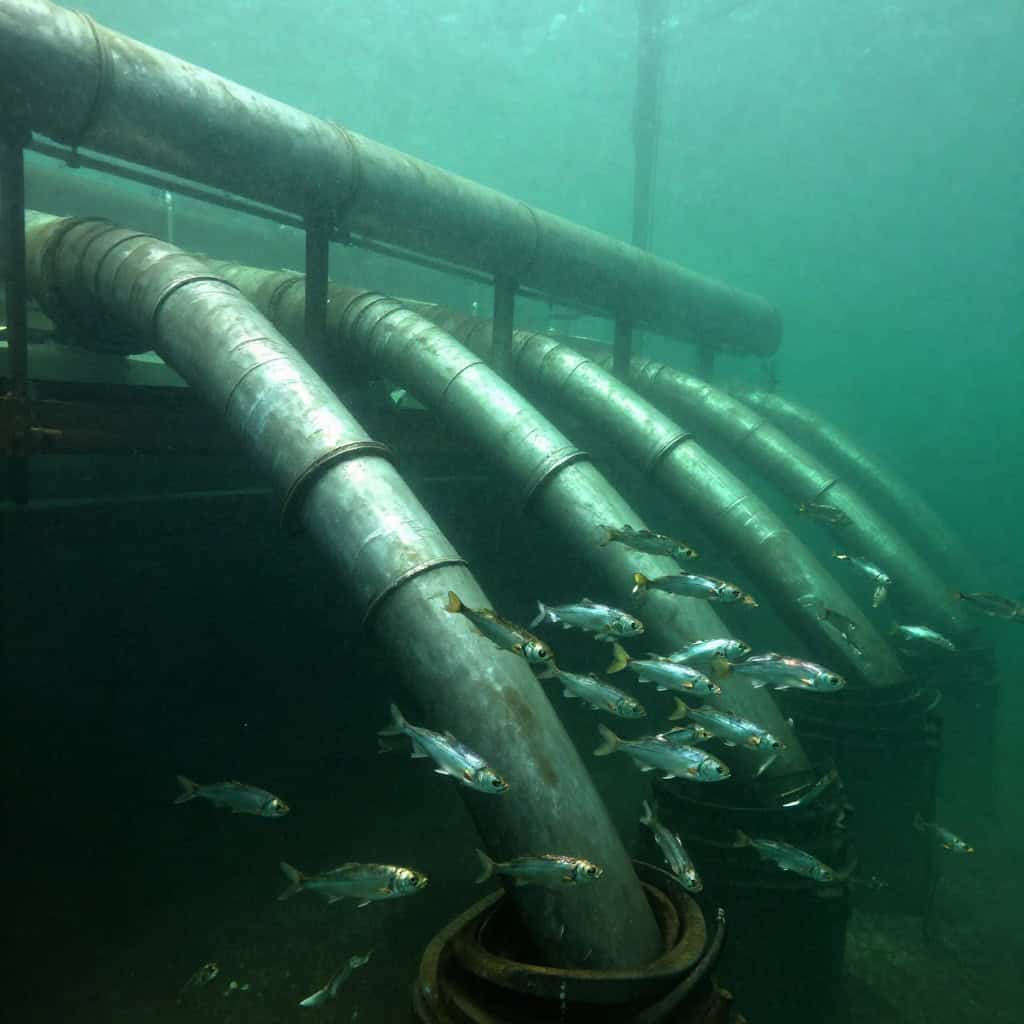
Before filtration, seawater enters through massive intake pipes. Small fish, eggs, and microscopic organisms frequently become trapped or perish during this intake process. Though less visible than dramatic pollution events, this cumulative impact gradually reduces local fish populations.
So How Much Water Do You Actually Get?
Approximately half of incoming seawater becomes potable water, while the other half transforms into concentrated brine waste — nearly equal proportions of product and pollutant. This reality rarely receives media attention.
These challenges limit desalination’s global contribution to freshwater supplies. Cost and energy requirements exceed alternative sources like rivers, aquifers, and recycled wastewater. Consequently, many communities treat desalination as a final option, even during severe water crises.
Desalination Isn’t All Bad — Let’s Be Fair
Some places genuinely require it. Nations like Israel and Saudi Arabia lack abundant freshwater alternatives, making desalination integral to their water security rather than supplementary.
Technology continues advancing. Contemporary methods consume less energy than predecessors, with engineers continuously improving filter efficiency.
Brine might become useful rather than waste. Research explores extracting valuable salts and minerals from brine instead of ocean discharge, though widespread implementation remains experimental.
Renewable energy integration is expanding. Facilities increasingly operate on solar and wind power, substantially reducing pollution impacts.
So, What’s the Point?
Desalination serves communities without viable alternatives, but represents no cost-free solution. It damages marine life through brine discharge and organism capture, requires substantial energy investment, and generates less usable water than popularly believed. Before constructing desalination infrastructure, prioritizing conservation, pipe repair, and wastewater recycling typically proves more economical and environmentally sound.
Read more from Susan at eco-nana.com.